
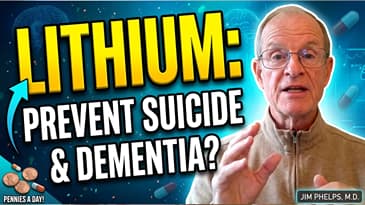
Dr. Phelps presents compelling evidence for lithium's anti-suicide effect, citing both striking clinical anecdotes and the Coppen 2000 data showing dramatically lower suicide rates among patients on long-term lithium maintenance. He addresses the recent VA study that failed to replicate this finding and references Nassir Ghaemi's critique of its methodological limitations of that study. The conversation then shifts to a broader framework: when a treatment's cost and risk are near zero — as with lithium orotate — the evidence threshold needed to justify its use drops considerably, making it a compelling option for dementia prevention even without definitive randomized trials.
The discussion concludes with Dr. Phelps articulating a pragmatic philosophy: cheap, low-risk interventions like low-dose lithium can harness genuine placebo responses alongside their pharmacologic effects, making them especially valuable when belief in the treatment is authentic. He argues lithium deserves a far more prominent place among antidepressant adjuncts, particularly given its unmatched safety profile at micro-doses and its potential to address some of psychiatry's most devastating outcomes — from suicide to cognitive decline.
1:46 — Meet Dr. Jim Phelps, Renegade Psychiatrist
3:46 — Low-Dose Lithium Beyond Bipolar Disorder
5:10 — When Lithium Prescribing Hit Rock Bottom
7:16 — What Inpatient Care Misses About Lithium
9:28 — Lithium's Remarkable Anti-Suicide Effect Explained
10:57 — Why Lithium Beats Other Antidepressant Adjuncts
12:26 — The Cost, Risk, and Evidence Framework
13:07 — Can Lithium Prevent Dementia and Alzheimer's
15:18 — Belief, Placebo, and Low-Risk Psychiatry